

Why do my legs and feet go dry in the winter?

Dry skin affects a significant number of older adults and a common place for it to start is on the lower legs and feet. There is one particular type we see a lot of in the clinic which occurs around October time every year – commonly known as winter itch.
What is winter itch?
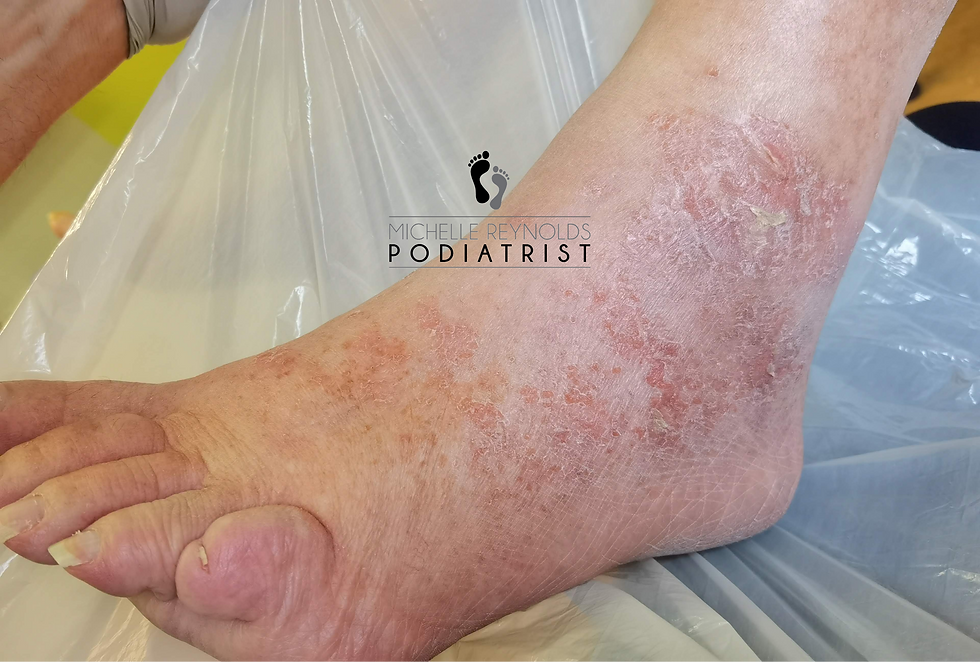
Put simply, winter itch is a type of dry skin which starts in the autumn time. The skin on the shins, around the ankles and the top of the foot become a bit dry, a little bit scaly, and red. Itching is also common! Some describe it as a crazing paving pattern on the skin. It’s a common form of eczema.
Why does skin get dry?
As autumn arrives, we see a change in the weather and consequently a change in the skin. From sun related issues like sunburn to the effects of cooler weather as the outside temperature drops. This is made worse in October as this is the usual month the central heating goes on, making the house warmer but the air drier.
The effect is the natural oil production in the skin reduces and so it begins to show signs of dryness – scale, redness, itching and occasionally weeping.
What makes it worse?
Drying of the skin has many causes but additionally these things can make it worse:
· Excessive bathing & showering (this removes the skins natural oils)
· Soaps, shampoos and shower gels
· Other illnesses – particularly skin problems
· Menopause
· The side effects of medications – like statins (well known for causing dry skin)
· Thyroid problems
Should I treat it?
It’s important to treat winter itch as the affected skin can become more sensitive and it may develop into a more widespread eczema. Also, dry skin on the feet and legs is more likely to develop secondary infection leading to more serious problems, particularly if you have diabetes or reduced circulation in your legs and feet.

What should I do about it?
Managing the problem is very simple in most cases – applying a good moisturiser. There are many in the shops, but selecting the right one for you is important. That’s where we can help in advising on the best ones for you and your legs.
Additionally, these tips may help you:
Avoid any soaps or things that lather, when showering or bathing as they can make the skin drier!
Rinse your legs off before you get out of the shower to remove any residual skin products like shampoos etc, that may trickle down your legs.
Dry your skin gently - dabbing with a soft towel. Rubbing can make dry skin more inflamed and sorer.
Use an emollient (moisturiser) immediately after showering to replace the lost oils from your skin.
Avoid woollen socks as these can irritate dry skin.
At the clinic, we are happy to have a chat with you about skin care and advise on the best moisturisers and how to use them to improve your dry skin. Just ask!
To make an appointment either call us on 0161 427 4937 or send an email to info@mrpodiatrist.co.uk